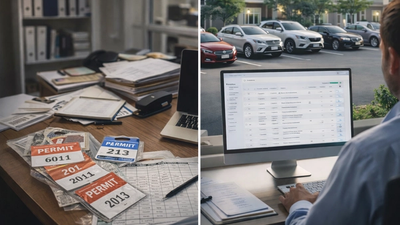
Let's be honest: most of your residents follow the rules. They register their vehicles, park in the right spots, and don't give parking a second thought. But that other 5%? They treat your parking lot like a puzzle to be solved—finding loopholes, gaming the system, and turning what should be simple into a daily headache for your team.
Here's the uncomfortable truth: if your parking system relies on a physical object—a hang tag, a sticker, a piece of paper—it can be manipulated. And it will be. Apartment parking fraud isn't a rare occurrence; it's a predictable outcome of systems built on trust instead of verification. The stakes go beyond a few stolen spots. You're looking at liability exposure, lost revenue from residents who should be paying for that second vehicle, and growing frustration from the honest residents who can't find parking because someone's "guest" has been squatting in the lot for three weeks.
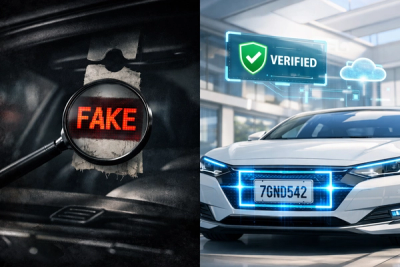
The good news? Technology has finally caught up. Virtual permit systems built around a "Digital Twin" concept—where the permit isn't a physical object but a live database entry tied to a license plate—have eliminated the vulnerabilities that scammers exploit. Learn more about how virtual parking permits work.
Quick Answers: Understanding Parking Fraud
How do residents fake parking permits?
The most common method is high-resolution scanning and printing (the "Photoshop Special"). Residents scan a valid hang tag, print it, and distribute copies to friends or roommates.
What is the "Forever Guest" loophole?
This occurs when a resident registers their own secondary vehicle as a "guest" repeatedly to avoid paying monthly parking fees. Without software tracking, these cars appear to be valid visitors.
Can virtual parking permits be forged?
No. Because a virtual permit is a database entry linked to a license plate rather than a physical object, it cannot be photocopied, lost, or shared.
Let's break down the five most common parking scams and how modern virtual systems shut them down instantly.
Scam #1: The "Photoshop Special" (Physical Permit Fraud)
How it works: A resident with a decent scanner and printer duplicates their hanging tag. The copy goes to a roommate, or friend who now parks for free. To the naked eye—or a tired patrol officer checking permits at 2 AM—it looks completely legitimate.
Why it works with physical permits: The entire system hinges on the object itself. There's no real-time validation happening. If the sticker looks right, it passes. Patrol teams can't realistically cross-reference every permit against a master list while walking through a 300-space lot.
The virtual solution: In a virtual permit system, the permit isn't an object—it's a database entry. The vehicle's license plate is linked directly to a unit, a resident, and a set of rules in a live system. When enforcement runs LPR (License Plate Recognition), the camera reads the plate and checks the database in real time. If the plate isn't registered and active, the vehicle gets flagged. There's nothing to photocopy. You can't forge a license plate that validates against a database you don't control. See how LPR enforcement integrates with virtual permits.
Scam #2: The "Lost & Found" Loophole (Physical Permit Fraud)
How it works: A resident reports their hang tag "lost" and requests a replacement. Management issues a new one—maybe charging a small replacement fee. But here's the twist: the "lost" tag was never lost. It's now hanging in a friend's car, a subletter's vehicle, or a renter's second car. One unit suddenly has two active permits for the price of one.
Why it works with physical permits: Tracking "active" versus "lost" tags requires maintaining manual lists that patrol teams rarely check—or can't easily access in the field. The old tag looks valid, the new tag looks valid, and nobody connects the dots until someone complains about the same car being in visitor parking for a month.
The virtual solution: With a virtual system, when a resident reports a vehicle change or claims they need to update their registration, the old permit (the license plate link) is instantly severed. The database reflects the change in real time. There's no lag, no manual list to update, no "oops, we forgot to deactivate the old one." See how the management interface allows you to have complete control over your parking.
Even better: the system enforces limits automatically. If Unit 4B is allowed one vehicle, they physically cannot register a second one without removing the first—or paying for an upgrade. You can't "lose" a virtual permit and double-dip. The math simply doesn't work.
Scam #3: The "Forever Guest" (Virtual/Hybrid Fraud)
How it works: A resident maxes out their vehicle limit—say, two cars per unit—but then buys a third. Instead of paying for an additional spot, they register that third car as a "guest" every 24 hours, cycling it through the guest portal to keep it safe from towing. Technically, it's always "permitted." Practically, it's apartment parking fraud and a direct hit to your bottom line. That "guest" is actually a resident abusing the guest parking spaces.
Why it works with basic apps: Simple parking apps just look for any valid permit. They don't track patterns or ask questions like "Why has this same 'guest' been here 47 nights in a row?"
The virtual solution: Advanced virtual systems like ApartmentPermits.com offer granular guest rules through their manager portal. You can set frequency caps—for example, "a single license plate can only be registered as a guest three times per month." The system tracks every registration. Explore how the management dashboard works for real-time permit control.
If a resident tries to register their own vehicle as a guest for the fourth consecutive night, the system blocks it and flags the activity for management review. The "forever guest" loophole closes completely. And because the data is logged, you have documentation if the conversation with the resident gets complicated.
Scam #4: The "Typo Trickster" (Virtual Fraud Attempt)
How it works: A resident knows their permit is expired or they're over their vehicle limit. They register the vehicle anyway—but intentionally change one character. Maybe they enter "O" instead of "0," or swap an "I" for a "1." If they get towed, they storm into the office with righteous indignation: "I registered! Look, it's right here! It's obviously just a typo—you owe me a refund!"
The goal is plausible deniability. They're betting that management would rather refund the tow fee than fight over one character.
The virtual solution: ApartmentPermits.com's SafePlate™ Smart Plate Matching technology recognizes these "fuzzy matches." When a guest goes to register the system will look at over a dozen data points to make sure that simple changes to the license plate text does not allow a guest to abuse the system. The loophole closes, the scam fails, and the resident can't claim ignorance.
SafePlate™ also protects honest residents who genuinely make typos. Instead of automatically towing a car with a one-character discrepancy, the system flags it for review. Fair enforcement, fewer disputes, and scammers don't get to exploit the margin of error. See how SafePlate™ prevents wrongful tows.
Scam #5: The "Role Reversal" (Virtual Fraud Attempt)
How it works: Residents attempt to play a shell game with their vehicles to dodge limits. They might register an extra car as a "Guest" to avoid monthly fees. Or, in a more complex scheme, once a guest vehicle hits its monthly frequency limit, they try to swap roles: registering the guest car as a "Resident" vehicle and moving their actual resident car to "Guest" status to reset the clock.
The virtual solution: ApartmentPermits.com eliminates this shell game by anchoring every permit to a strictly controlled unit roster managed directly within the system. You define exactly which units exist and who belongs in them. A user cannot simply claim to be a resident; they must match the pre-authorized roster you control.
But the protection goes deeper than just checking names. The system employs advanced fraud detection across both resident and guest registrations. It tracks over a dozen data points—including device fingerprints, IP address patterns, and historical vehicle behavior—to detect anomalies before they become problems.
This means the system identifies the "Swap" immediately. If a vehicle has been visiting as a "Guest" for weeks and suddenly attempts to register as a "Resident" (while another car from that unit simultaneously switches to "Guest"), the system flags the abuse. It identifies users trying to game the rules, regardless of whether they are claiming to be residents or visitors. The fraud detection runs continuously, ensuring that a vehicle cannot change its identity just to reset its limits.
The Bottom Line: Peace of Mind is Profit
Every scam on this list relies on two things: chaos and lack of data. Physical permits create chaos because they can be lost, copied, shared, and forged. Manual systems lack data because nobody has time to cross-reference spreadsheets at midnight.
Virtual permits eliminate both problems. The permit is the data—a live, validated link between a license plate and your property's rules. There's nothing to fake, nothing to lose, and nothing that falls through the cracks.
The ROI isn't just about catching bad actors. It's about freeing up spaces for honest residents who've been circling the lot. It's about capturing revenue from the people who should have been paying for that second spot all along. And it's about giving your team their time back—time they've been spending playing parking detective instead of running your property.
Stop playing detective. Let the system do the work.