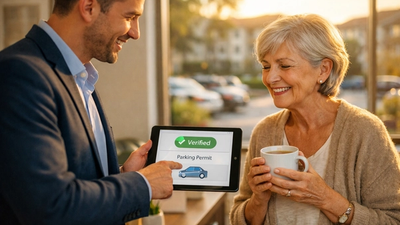
Virtual Parking Permits: The Complete 2026 Guide for Multifamily Communities
How modern properties are eliminating permit fraud, reducing admin work, and turning parking into a profit center—plus a practical 30-day transition plan.
Last updated: January 12, 2026
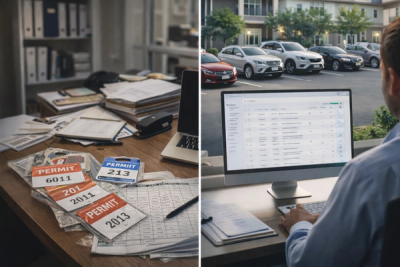
What Virtual Parking Permits Enable
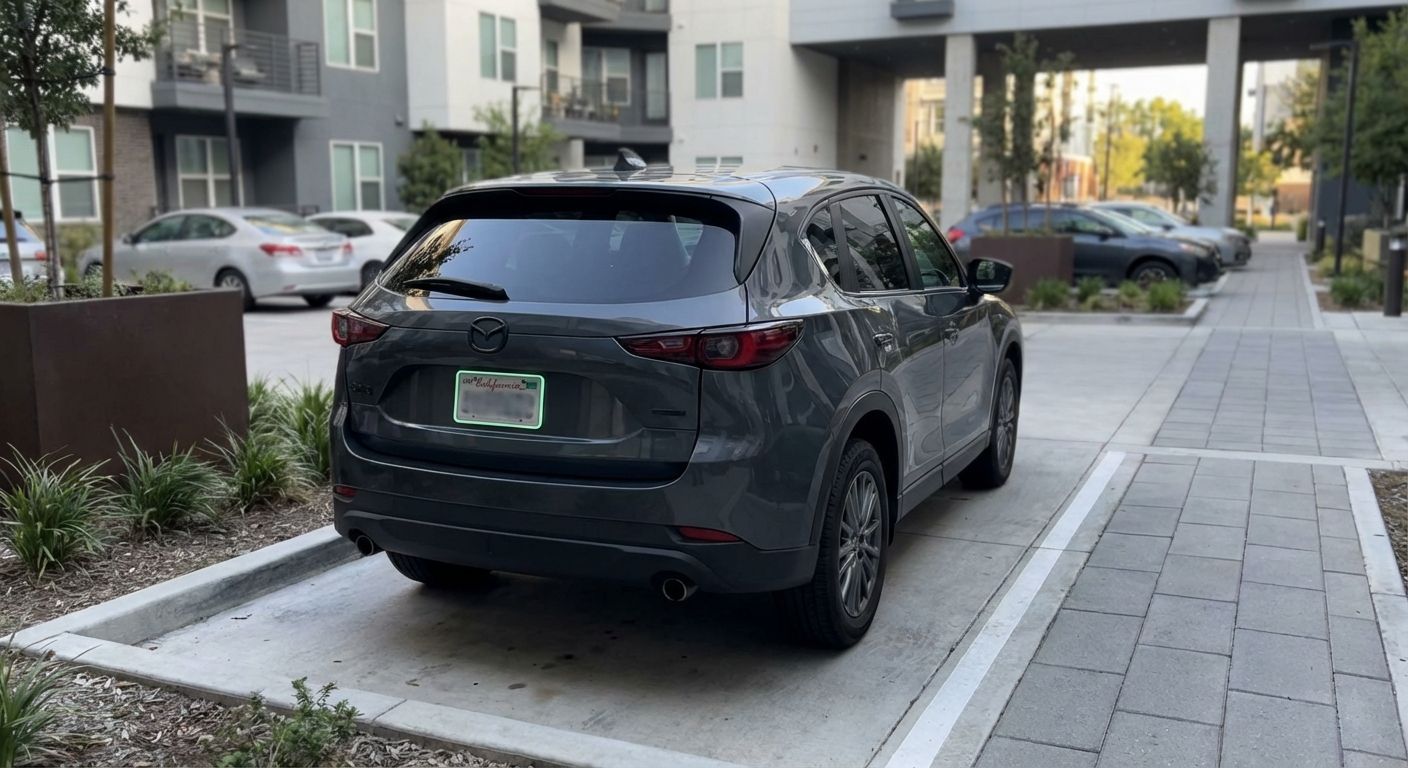
License Plates Become the Permit
Instead of issuing hangtags or stickers, vehicles are authorized by their license plate number. This removes the need for physical permits entirely while giving staff and enforcement instant visibility into who is allowed to park.
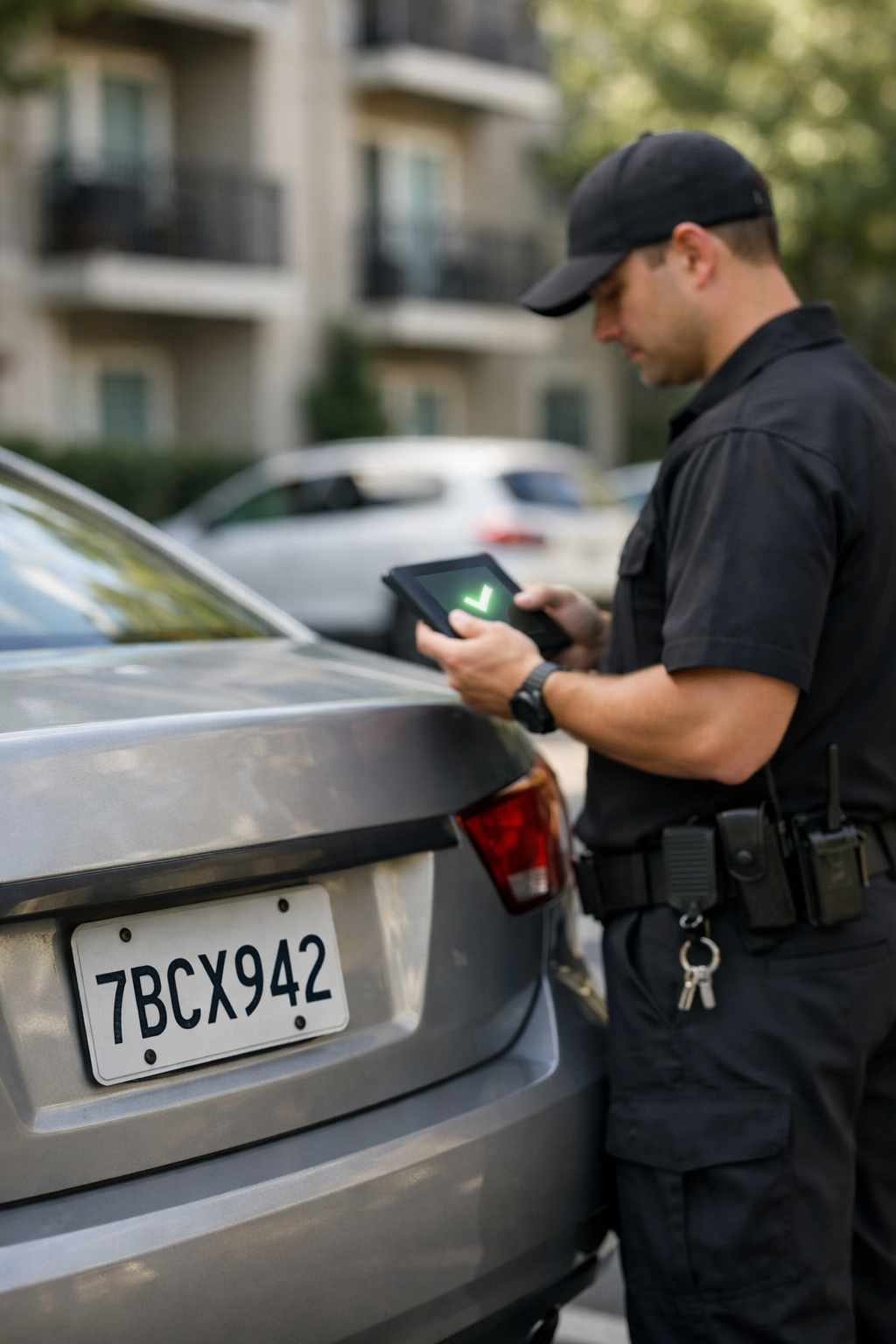
Instant Permit Verification
Parking staff can verify a vehicle’s permit status in real time, eliminating guesswork, manual checks, and outdated permit lists.
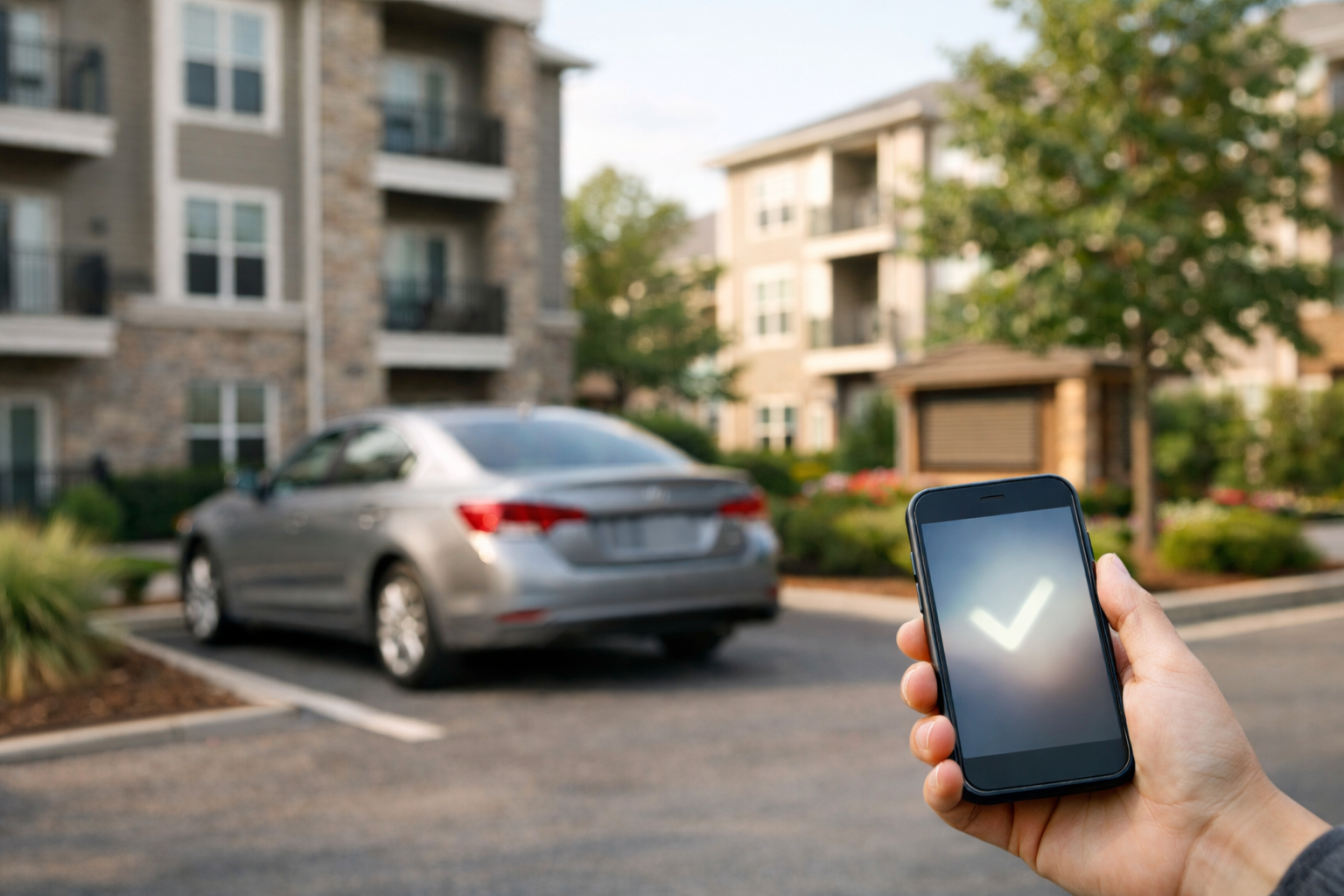
Built-In Guest Parking Management
Residents can register guest vehicles digitally, allowing properties to manage visitor parking without temporary paper passes or front-office involvement.
PART ONE: UNDERSTANDING VIRTUAL PARKING PERMITS
I. Introduction: The Death of the Hanging Tag
The Shift in Property Management
The plastic hangtag has had a long run. For decades, property managers relied on stickers, decals, and paper permits to track which vehicles belonged in their lots. But these physical permits came with constant headaches: residents lost them, guests borrowed them, and bad actors forged them. Staff spent hours each week printing replacements, chasing down expired tags, and sorting out disputes that went nowhere.
In the 2020s, that model is finally breaking down. New technology combining cloud-based software and license plate recognition has made physical permits not just outdated—but unnecessary. Digital parking permits are now the standard for modern multifamily communities.
Defining the Virtual Permit
A virtual permit is exactly what it sounds like: a parking credential that exists entirely in software that uses license plate information. Instead of issuing a paper permit, you register a vehicle license plate in a parking portal. That vehicle's license plate becomes the resident's valid permit. When enforcement scans the lot or campus, they're not looking for a sticker—they're checking plates against active permits in the system in real time.
Who This Guide Is For
This guide is written for property managers, ownership groups, and operators across the multifamily industry. Whether you oversee a single community or a national portfolio, the ideas here apply. The goal is to give you a clear understanding of how virtual permitting works, what problems it solves, and how to make the switch without disrupting your residents or your team.
The Goal of This Guide
By the end, you'll have everything you need to move to a frictionless, digital-first parking strategy—from the technology basics to a practical rollout plan you can finish in 30 days.
II. What Are Virtual Parking Permits?
The Technology Behind the Permit
At its core, a virtual permit system replaces physical printed permits with data. Instead of handing a resident a hangtag, you link their vehicle license plate number to their unit in a parking database. That connection is the permit.
The system stores the plate number, vehicle make and model, and the resident's unit—all tied together in one record. When that vehicle enters your lot, enforcement can instantly check whether it belongs there by scanning the plate number using LPR technology.
The "Digital Twin" Concept
Think of each registered vehicle as having a "digital twin" in the system. The physical car in your lot has a matching data record that includes everything important: who owns it, where they live, when their lease ends, and whether they're allowed in a reserved or covered spot.
This digital twin updates on its own. If a resident gets a new vehicle, they swap the plate in the portal. If they move out, their parking account along with their vehicle information is deleted. No collection needed. No orphaned permits floating around the property.
Why Virtual Permits?
The administrative benefits are immediate. There's nothing to print, nothing to purchase, nothing to replace, and no need for temporary permits. Updates happen in seconds through an online parking system. For properties managing hundreds of units, this alone can save dozens of staff hours each month.
Physical vs. Virtual Permits: A Comparison
Physical vs. Virtual Permits
| Feature | Physical | Virtual |
|---|---|---|
| Distribution | Manual | Online Self Service |
| Replacement | Office Visit | Quick Update |
| Fraud Risk | ||
| Guest Management | Paper Logs | Automated System |
| Real-Time Visibility | ||
| Enforcement | Manual Checks | License Plate Recognition |
| Move-Out Handling | Permits Collected | Auto Deactivation |
| Revenue Potential | Limited Opportunities | Guest and Other Monetization |
| Property Costs | Ongoing Costs | No Expenses |
III. Common Myths & Objections
Before diving into features, let's address the concerns that come up most often when properties consider virtual permitting.
Myth 1: "Our residents won't adopt a digital-only system."
This is the most common objection—and the least supported by reality. Today's residents manage banking, rent payments, maintenance requests, and package deliveries through apps and portals. Adding vehicle registration to that list isn't a leap; it's an expectation.
For residents who don't have smartphone access or internet connectivity, most virtual permit platforms offer a concierge option. Office staff can register vehicles on their behalf in minutes. No one gets left behind.
Myth 2: "LPR technology isn't accurate enough for enforcement."
Modern License Plate Recognition systems reach accuracy rates over 99%. But most systems don't stop there. Before any enforcement action is taken, officers manually verify the plate to confirm whether a valid permit exists. This human checkpoint handles the rare edge cases where a read might be unclear.
Myth 3: "Virtual permits are more expensive than physical stickers."
This myth assumes properties need to invest in cameras or hardware. In most cases, they don't. Parking enforcement companies already have the LPR cameras and equipment. The property's only role is managing the database—typically done through a simple web portal.
When you add up the savings from eliminating printed permits, reducing staff time, and potentially charging for guest permits, most properties don't just break even—they come out ahead.
IV. Solving the Parking Pain Points
Eliminating Permit Fraud
Physical permits have a basic flaw: they can be shared, stolen, or copied. A former resident keeps their old hangtag. A current resident loans theirs to a friend. Someone prints a convincing fake.
Virtual permits eliminate these problems entirely. The credential is the vehicle license plate itself—and you can't hand your plate to someone else. When a resident moves out, their license plate information is removed from the system that same day.
Real-Time Data Visibility
With physical permits, you're basically guessing who's parked on your property. You see hangtags, but you don't know if they're current or valid without digging through paperwork.
Virtual systems flip this around. Every registered vehicle is logged in a live database. Managers can see exactly how many resident vehicles are on-site, which guest passes are active, and which spots are taken—all from a dashboard.
Reducing "Desk Time"
Parking questions eat up leasing office time. Residents stop by for replacements. Guests need passes. New move-ins need setup.
Virtual platforms address this with automation. Residents register their own vehicles. Guests can be added via the resident portal—or guests can register themselves. The system enforces your rules automatically, with no manual tracking required.
V. The Resident & Guest Experience
The Frictionless Registration Flow
For residents, adding a vehicle should take seconds—not a trip to the leasing office. Modern virtual permit platforms offer web-based portals where residents log into their online account, enter their vehicle license plate number, and confirm details from any device. They can also add a new vehicle at any time without needing to contact the office or wait for approval—all subject to the rules you set.
Guest Management Redefined
Virtual platforms solve guest parking with configurable rules. Residents register guests through a portal, or guests can register themselves. Managers set the parameters: time limits, maximum active passes per unit, or per-stay fees. The system enforces these automatically.
Managing Rentals & Loaners
Residents sometimes drive rental cars or borrow vehicles. Virtual systems handle this easily—residents temporarily add a loaner vehicle to their parking account and remove it when their car returns. No office visit required.
Bridging the Digital Divide
For residents without smartphones, office staff can register vehicles on their behalf using the concierge option. No one is excluded.
The "No-App" Advantage
Web-based systems work on any device with a browser. There's nothing to install, no app store to navigate. This means faster adoption and fewer support requests.
VI. Enforcement: The Backbone of the System
What Is LPR (License Plate Recognition)?
License Plate Recognition uses cameras and optical character recognition to read plates automatically. LPR can be set up via mobile units mounted on patrol vehicles or fixed cameras at entrances.
Modern LPR software has moved far beyond just reading plate text. Today's systems recognize the state of the license plate, vehicle make, model, color, and vehicle type. This extra data means fewer mistakes and richer information available to enforcement officers when checking vehicles.
Modern Enforcement Workflows
When an officer scans a plate, the LPR software returns an instant, color-coded result. Resident vehicles, guest vehicles, and unregistered vehicles are all shown differently—making it immediately clear what action, if any, is needed. A vehicle with an active permit displays as a valid permit holder, while unregistered plates are flagged for review.
VII. The ROI of Going Virtual
Direct Cost Savings
Physical permits carry ongoing costs: printing, supplies, and staff time. Virtual permits eliminate this expense entirely.
Increased NOI
Guest parking can be monetized with fees collected directly through the platform. For properties that used to offer free guest parking, this is net-new income.
Enforcement visibility also helps. When you can accurately identify unauthorized vehicles, you reduce free riders taking resident spots or unauthorized tenants.
PART TWO: HOW APARTMENTPERMITS.COM DELIVERS THESE BENEFITS
VIII. Why ApartmentPermits.com
The benefits of virtual parking permits are clear. But not all platforms deliver them equally. ApartmentPermits.com was built specifically for multifamily communities—designed to solve the problems property managers actually face, not retrofitted from university or municipal parking systems.
Here's how ApartmentPermits.com addresses the challenges we've outlined.
Smart Plate Matching
Data-entry errors happen. A resident types "ABC123" instead of "ABC1234." With some systems, that small mistake leads to a wrongful citation or tow.
ApartmentPermits.com automatically accounts for common user errors when residents enter their plates—swapped characters, missing spaces, or minor typos. The system matches plates smartly, so a small data-entry mistake doesn't lead to enforcement issues.
No Hardware Investment Required
Parking enforcement companies that use the ApartmentPermits.com system already have the LPR cameras and equipment. The property's only role is managing the database—done through a simple web portal.
Enforcement officers can also search vehicles through a mobile-friendly website, quickly looking up any plate or sorting by permit type. No special equipment is needed on the property side.
Vendor Flexibility
Some platforms lock you into a single enforcement provider. ApartmentPermits.com gives you complete control. You can enforce your parking rules exactly how you want, using any vendor you choose.
If you decide to change enforcement companies, you don't have to switch software. Since our platform works with any vendor, you can swap providers whenever you need to without disrupting your virtual parking permits system.
IX. Advanced Manager Portal & Configurable Rules
Granular Property Controls
With ApartmentPermits.com, managers set vehicle limits per unit and configure permit expirations tied to property settings. Rules are enforced automatically.
Reserved & Covered Parking Management
The system maps specific stalls to specific permits. Resident 4B gets Spot 12. If someone else parks there, enforcement knows right away. For households with more than one car, multiple vehicles for the same unit can be authorized to park in the same reserved spot—so both the resident and their spouse can use the assigned space without confusion.
This setup is especially valuable for premium parking that brings in higher rent, like covered spots or garage spaces.
The Audit Trail
Every vehicle addition, guest pass, and change is timestamped and tied to a user. If a permit holder disputes an enforcement action, you pull the record and see exactly what happened.
Monetization & Payments
For properties that charge for guest parking, ApartmentPermits.com supports payment collection directly through the platform. We'll configure the pay parking rates based on the options you want to offer to customers.
X. Integration & Scalability
The Ecosystem Approach
ApartmentPermits.com works alongside your existing software by allowing you to import resident and unit reports directly from systems like Yardi, Entrata, RealPage, OneSite, RentManager, and others. This makes it simple to populate your parking database with the information already in your records—without starting from scratch.
Portfolio-Level Management
ApartmentPermits.com supports portfolio-level dashboards for operators managing multiple properties. Monitor parking across your entire portfolio from a single login.
XI. Transition Strategy: How to Go Virtual with ApartmentPermits.com
Week 1: Import Your Data
Export a resident report from your property management system—OneSite, Entrata, Resman, Yardi, or others. ApartmentPermits.com imports this data directly, filling in unit information without manual entry. This single step removes the most tedious part of setup.
Week 2: Configure Rules & Train Staff
Set up your parking rules: vehicle limits, guest policies, reserved spots, premium tiers. Train your leasing team on the portal—most are comfortable within one session.
Week 3: Notify Residents
Communicate the change through your existing channels or directly through ApartmentPermits.com. Set a registration deadline and highlight the benefits: no more lost permits, easier guest registration, faster service. Offer concierge help for residents who need it.
Week 4: Go Live
On your deadline date, enforcement begins based on your preferences. Only vehicles with a valid virtual permit will be recognized as compliant. Monitor the dashboard, address stragglers, and confirm data is flowing correctly.
First 90 Days: Measure Success
Track registration completion, parking complaints, desk time saved, guest revenue, and enforcement activity. These numbers show ROI and help you fine-tune policies.
XII. Conclusion & Next Steps
Summary
Virtual parking permits have moved from emerging technology to industry standard. The benefits are clear: eliminated fraud, real-time visibility, reduced workload, and new revenue. The technology is proven, implementation is straightforward, and ROI is typically immediate.
ApartmentPermits.com makes the transition simple—with smart plate matching, flexible enforcement options, seamless PMS integrations, and a 30-day rollout plan that won't disrupt your residents or your team.
A Smarter Way to Manage Parking Permits—All in One Platform.
Streamline enforcement, reduce complaints, and unlock new parking revenue—without adding operational overhead.
Fill out a quick form and we'll reach out to schedule a personalized demo.

Frequently Asked Questions
The ApartmentPermits system allows for either guests or residents to request a guest pass. Residents can register a guest vehicle through their portal. Guests may register their vehicle themselves using the guest portal.
No. When using the ApartmentPermits system accounts are issued by management and there is no account to create. Residents can login to the resident portal using their unit details.
Virtual permits are secure because parking authorization is tied to a license plate in the system—not a physical tag that can be copied or shared. ApartmentPermits.com includes permission-based access and an audit history so staff and enforcement can verify permit status and track changes over time.
Electronically enforced parking works by linking parking permissions to a vehicle’s license plate instead of a physical hang tag. Residents and property staff register vehicles digitally, and enforcement verifies compliance by scanning plates and matching them to active permits and rules (guest limits, reserved spaces, expired permits, etc.). ApartmentPermits.com provides the permit database, rule controls, and enforcement tools to keep the process secure and consistent.
QR code parking works by using a scannable code as a fast way to register a vehicle for parking. A driver scans the QR code posted on-site (or sent digitally), enters their license plate and any required details, and the system creates a digital parking permission instantly. The QR code itself isn’t the permit—it simply makes check-in quick and reduces errors compared to manual entry.
To register a new vehicle, log in to your resident portal and remove the vehicle you no longer use, then add your new vehicle’s license plate to your account. Since digital permits are tied to the license plate (not a physical tag), updating the plate updates the permit automatically. If you’ve already reached your maximum number of allowed vehicles or permits, you may need to remove one vehicle before adding another.
Virtual parking permits typically become valid immediately after your vehicle is successfully added to your account and appears as an active vehicle in the resident portal. Since the permit is tied to your license plate, your parking authorization starts as soon as the system confirms the plate is registered and active.
Yes—paying through parking apps is generally safe when the platform uses a trusted, secure payment processor and follows standard security practices. ApartmentPermits.com processes payments through Stripe, a widely used payment provider that applies encryption and industry-standard protections to help keep your payment information secure.
Visitor parking typically works by allowing guests to park for a limited time under rules set by the apartment community. In ApartmentPermits.com, management can configure guest limits (like duration, number of active passes, or allowed hours), and residents can register visitors ahead of time—or guests can register themselves if the property allows it. The system also provides clear guidance on where visitors are allowed to park on-site to help prevent confusion and avoid violations.
Permit parking is a system where only authorized vehicles are allowed to park in a specific area, such as an apartment community, based on an assigned parking permit. Instead of being open to the public, parking access is controlled through rules set by the property—like resident permits, guest passes, time limits, and designated parking zones. With digital permit parking, authorization is typically tied to a vehicle’s license plate and managed through an online system like ApartmentPermits.com.
Student housing parking typically uses license plate-based permits to manage resident vehicles, visitor access, and limited parking capacity. With ApartmentPermits.com, students can register vehicles online, housing staff can set permit limits and rules, and enforcement can verify compliance using real-time permit data.
Related Resources
Turning Asphalt into Revenue: How to Monetize Guest Parking Without Alienating Residents

The Hidden Cost of Hangtags: Why Your "Cheap" Parking Solution is Leaking Money
The Invisible Gatekeeper: Why License Plates are the New Key Fobs for Multifamily Parking

Counterfeit Tags & Forever Guests: 5 Parking Scams Your Residents Are Getting Away With