Parking Management Software: What It Is, What to Look For, and How to Choose the Right System
Managing a parking operation with clipboards, hang tags, and guesswork is a fast track to frustrated residents, unauthorized vehicles, and revenue left on the table. Parking management software replaces those manual processes with a digital system that handles permits, enforcement, payments, and reporting from a single dashboard.
Trusted by 1,000+ Communities








What Is Parking Management Software?
Whether you oversee a 50-unit apartment community or a portfolio of thousands of doors, the right parking software can transform parking from a daily headache into a streamlined, revenue-generating operation.
The parking management market reflects that shift. Industry analysts project the global market will grow from roughly $5-7 billion in 2025 to well over $12 billion by the early 2030s, driven by urbanization, rising vehicle counts, and demand for smarter infrastructure. For property managers at multi-family communities, that growth translates into more options -- and more reasons to understand what separates a good parking management system from a great one.
This guide breaks down the core features, technology, pricing considerations, and decision factors that matter most when evaluating parking software for your property.
A parking management system is a digital platform that automates the day-to-day tasks of running a parking operation. At its core, the software tracks which vehicles are authorized to park, manages permits and registrations, enforces rules, and collects data on how parking spaces are being used.
Modern parking software typically operates in the cloud, giving property managers and enforcement teams access from any device -- desktop or mobile -- without installing dedicated hardware or downloading apps. The best systems connect three groups that all need to work together: property management, residents or users, and enforcement providers. When those connections happen digitally instead of through phone calls and paper trails, operations run faster, errors drop, and everyone involved has better visibility into what is happening in the lot.
For multi-family communities specifically, parking software replaces outdated methods like physical hang tags and window decals with virtual permits tied directly to license plates. This eliminates the most common problems with traditional systems -- permits that get lost, transferred between vehicles, or simply ignored.

Key Features of Effective Parking Software
Not every parking management system offers the same capabilities. The features that matter most depend on your property type and operational needs, but several core functions separate serious platforms from basic tools.
Virtual Permits and Registration
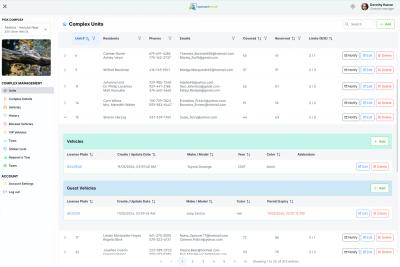
The foundation of any modern parking system is digital permitting. Residents register their vehicles online -- typically through a web-based portal that works on any mobile device -- and their license plates become their permits. There is nothing to print, distribute, or replace. This self-service approach dramatically reduces the administrative burden on leasing offices and front desks. Guests can register through a similar process, with time limits and quantity controls set by the property.
Date | Event Type |
|---|---|
| 11/01/2025, 05:18:12 PM | Vehicle added |
| 11/01/2025, 05:13:37 PM | Resident deleted |
| 11/01/2025, 05:10:40 PM | Guest vehicle registration failed limit reached |
| 11/01/2025, 04:58:22 PM | Unit updated |
Access Control and Security
Access control in a parking context means knowing exactly which vehicles belong on your property and which do not. Software-based access control relies on license plate data rather than physical barriers. When paired with license plate recognition (LPR) technology, enforcement teams can validate vehicles instantly -- no need to leave the truck or manually check hang tags. This approach strengthens security across the entire lot because every vehicle is tracked against a verified database, making unauthorized parking easy to identify and address.
Enforcement Integration
Enforcement is where parking rules become real. The most effective parking management platforms integrate directly with enforcement providers, sharing real-time permit data so towing or booting companies can make fast, accurate decisions on the ground. Look for systems that let you choose your own enforcement vendor rather than locking you into a single provider. Violation tracking, enforcement invoicing, and communication tools that let you send enforcement requests without leaving the dashboard all reduce friction between your office and the boots on the ground.
Close-Match Detection
Close-Match Detection
Advanced enforcement features like close-match detection -- where the system flags license plates that are near-matches to registered vehicles -- prevent costly mistakes. A resident who accidentally enters one wrong digit on their plate should not come home to find their car towed.
Date | Event Type |
|---|---|
| 11/01/2025, 05:18:12 PM | Vehicle added |
| 11/01/2025, 05:13:37 PM | Resident deleted |
| 11/01/2025, 05:10:40 PM | Guest vehicle registration failed limit reached |
| 11/01/2025, 04:58:22 PM | Unit updated |
Payment Processing and Revenue Generation
For properties that charge for parking, payment processing is a critical feature. Parking software should handle online payments for permits, passes, and guest registrations without requiring a separate payment system. The ability to offer paid parking -- whether for premium spaces, additional vehicles, or guest access -- turns parking from a cost center into a revenue stream.
Flexible Pricing Models
The key is flexibility. Some communities want to offer a set number of free permits per unit and charge only for extras. Others want to monetize every space. The right software accommodates either model without complex workarounds. When the platform handles payment collection and splits revenue with the property, the parking program essentially funds itself -- generating income rather than adding expense.
Reporting and Parking Analytics
Data-driven decision making requires data you can actually use. Reporting tools should tell you how many vehicles are registered, how often guest permits are issued, which units are generating the most enforcement activity, and where revenue is coming from. Parking analytics goes a step further, revealing occupancy patterns, peak usage times, and trends that help you adjust policies proactively rather than reactively.
Budget and Performance Insights
For multi-family managers, this data is especially valuable during budget season, lease renewals, and conversations with ownership groups about property performance. A parking program that can demonstrate measurable revenue and reduced complaints carries real weight.
Smart Parking, Technology, and Permit Management
Smart Parking and Advanced Technology
The term "smart parking" gets used broadly, but at its core it means using technology to make parking operations more intelligent and less manual. Several technologies are reshaping what parking management software can do.
### License Plate Recognition (LPR)
[LPR](https://www.apartmentpermits.com/articles/the-invisible-gatekeeper-lpr) is the backbone of automated enforcement. Cameras -- mounted on patrol vehicles or at fixed locations -- capture license plate images and compare them against the permit database in real time. This makes enforcement faster, more accurate, and less labor-intensive than manual patrol. For multi-family communities, LPR paired with virtual permits means enforcement can validate every vehicle in a lot in minutes rather than hours.
### Real-Time Data and Automated Operations
The real power of modern parking software is what happens automatically. Automated notifications alert residents when their registration is incomplete or when a guest permit is about to expire. Automated enforcement data sharing means your enforcement partner always has the latest permit list without anyone sending a spreadsheet. Automated reporting delivers insights on demand without manual data pulls. The more the system handles on its own, the less time your team spends on parking -- and the fewer mistakes slip through the cracks.
Dynamic Pricing: A Growing Trend
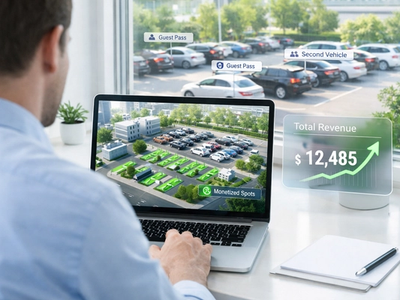
Dynamic pricing adjusts parking rates based on demand, time of day, or occupancy levels. The concept borrows from airline and hotel revenue management -- charge more when demand is high, offer discounts when lots are empty. Industry data suggests that dynamic pricing can increase parking revenue by 10-25% at facilities where demand fluctuates significantly.
For commercial garages, event venues, and mixed-use properties, dynamic pricing is becoming a standard capability. AI-driven pricing engines analyze historical patterns, real-time occupancy, and external factors like events or weather to recommend or automatically set optimal rates.
For most multi-family apartment communities, traditional dynamic pricing is less relevant. Residential parking demand is relatively stable and predictable. However, the principle behind it -- charging appropriately for the value you provide -- applies in a simpler form: tiered pricing for premium spaces, additional vehicle fees, and paid guest access. These strategies generate consistent revenue without the complexity of real-time rate adjustments.
Parking Permit Management for Multi-Family Communities
Permit management is arguably the single most important function of parking software for apartment communities. A strong parking permit management system handles the full lifecycle: application, approval, issuance, renewal, and revocation -- all digitally.
The shift from physical permits to [virtual permits](https://www.apartmentpermits.com/virtual-parking-permits) solves several persistent problems. Physical hang tags can be duplicated, shared with non-residents, or simply lost. When a resident moves out, they may take the tag with them or pass it along. Virtual permits tied to license plates cannot be transferred -- when a resident leaves, their vehicles are removed from the system, and enforcement knows immediately which plates no longer belong.
For properties that need to limit the number of vehicles per unit or control [guest parking](https://www.apartmentpermits.com/articles/the-guest-parking-nightmare) frequency, digital permit management makes rule enforcement automatic rather than discretionary. The system applies the rules consistently, which reduces complaints about unfairness and takes the burden off your on-site team.
Communities can also generate revenue through their permit programs by charging for resident permits, guest permits, and reserved parking. When this revenue flows through the platform on a revenue-share basis, the property benefits without paying any upfront software costs.