The #1 Source of 1-Star Reviews
You spent months upgrading the clubhouse, installing a new dog park, and staging the perfect model unit. Then one Friday night, a resident's guest gets towed because no one in the leasing office was around to issue a visitor pass — and a one-star review hits Google before Monday morning.
It doesn't matter how beautiful your amenity package is; a single parking disaster can undo months of goodwill in a few furious sentences.
The frustration cuts both ways. Your paying residents deserve to come home to an open spot after a long day. But a community that makes visitors feel unwelcome — or worse, afraid of being towed — isn't one that earns renewals or referrals.
Striking the right balance between accessibility and accountability is one of the most persistent operational challenges in multifamily management. The good news is that modern visitor parking management has evolved far beyond clipboards and cardboard hangtags. With the right set of apartment guest parking rules, backed by digital tools and real-time enforcement data, the chaos can be eliminated entirely.
This guide will show you exactly how.
Common Apartment Guest Parking Problems
Before you can fix the problem, you need to understand how it spirals out of control. Most guest parking breakdowns follow a few predictable patterns.
The "Stealth Resident"
Almost every property manager has encountered this: a boyfriend, girlfriend, or unofficial roommate whose car appears in the lot every single night but whose name appears on zero leases.
Vague guest policies give these unauthorized occupants the perfect cover story. They claim to be visiting, week after week, while consuming a parking spot that a rent-paying neighbor desperately needs.
Over time, one stealth resident turns into several, and the parking inventory quietly shrinks with no clear paper trail to trace.
The Paper Trail Failure
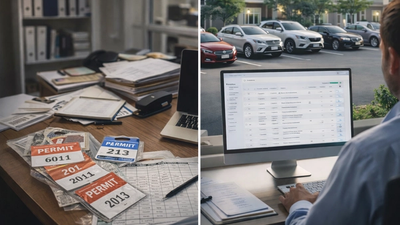
Physical visitor hangtags were never designed to withstand creative abuse. They get hoarded, photocopied, passed between friends, or conveniently "lost" — triggering a fresh replacement from the front desk every time.
Staff members end up playing detective, trying to figure out which tags are legitimate and which are floating through the community like counterfeit currency.
The core issue is that hangtags and decals can easily be passed from car to car, effectively canceling out their purpose the moment someone decides to share them. One property manager summed up the frustration this way: even after implementing a color-coded permit program and parking zones, visitor parking remained nearly impossible to manage.
The Weekend Free-for-All
Friday at 5 PM, the leasing office closes. Saturday morning, your lot is overflowing with unregistered vehicles because there's no one available to issue temporary passes.
Requiring people to go through staff for guest parking means residents can only secure it when the office is open, and many guest-parking needs arise after hours.
Residents who left for dinner return to find every spot claimed by mystery cars. Complaints pile up over the weekend, but resolution has to wait until Monday — by which time the damage to resident trust is already done.
How to Draft Bulletproof Apartment Guest Parking Rules
Clear, enforceable apartment guest parking rules are the foundation of a well-managed community. Without them, every parking conflict devolves into a he-said-she-said dispute with no resolution framework.
Here's how to get it right.
Setting the Boundaries
Ambiguous limits invite abuse. Pick a structure and make it specific: a maximum stay of 72 consecutive hours, a cap of five guest-parking days per month per unit, or a combination of both.
Modern platforms like ApartmentPermits allow managers to configure visit duration limits, monthly hour allocations per unit, overnight restrictions, or any combination that makes sense for a specific property.
Communities with explicit, numeric limits experience far fewer chronic-abuse situations than those relying on subjective language like "reasonable" or "occasional." The key is specificity — a rule a resident can count on their fingers is a rule they'll actually follow.
Defining the "Guest"
Your policy needs to draw a bright line between three very different categories of people:
- The Temporary Visitor: Someone attending a dinner party or spending a weekend.
- The Daily Caregiver: A recurring visitor with a legitimate, documentable reason to be on-site regularly.
- The Unauthorized Occupant (The Stealth Resident): Someone who is effectively living at the property without being on the lease.
Spell out that any individual whose vehicle is registered at the property more than a defined number of days per month may be reclassified as an occupant — triggering lease-violation procedures rather than guest-parking rules.
This distinction alone eliminates the biggest loophole stealth residents exploit.
Lease Integration
The most well-crafted parking policy in the world is unenforceable if it isn't part of your legal agreement with the resident.
Guest parking rules should appear in a dedicated lease addendum that every resident signs at move-in. The lease should outline where and when visitors can park, any permit requirements for guests, and time limits for visitor parking — preventing unauthorized vehicles from taking tenant spaces.
Requirements should cover:
- Vehicle limits per unit
- The guest registration process
- Time-limit caps
- Consequences for violations — including towing at the vehicle owner's expense
Reinforce the written policy with clear, visible signage throughout the property so that guests themselves understand the rules before they even step out of their car. When expectations are set in writing and in plain sight, the vast majority of disputes simply never start.
Modernizing Visitor Parking Management
Even perfect rules break down if the only way to follow them is a trip to the leasing office during business hours. The single biggest improvement a property can make is removing itself from the guest-pass bottleneck entirely.
The Self-Service Shift
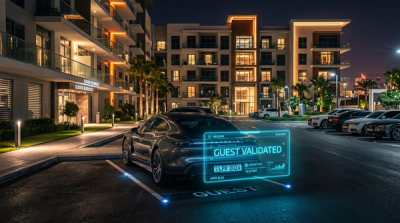
Digital-first platforms allow residents — or their guests — to register a visitor's license plate through a web portal that's available around the clock. No app download is required, no physical tag needs to be issued, and no staff member needs to be involved.
Virtual permits are tied directly to a license plate in the system rather than a physical tag that can be copied or shared, and the platform includes permission-based access and an audit history so staff and enforcement can verify permit status at any time.
The result is that your leasing team stops fielding parking requests and starts focusing on leasing and resident relations instead.
Frictionless Registration
When a resident knows their mother can register her own vehicle at 9 PM on a Sunday night, the anxiety around guest parking disappears.
Every guest registration is logged with the sponsoring resident, the vehicle they authorized, and the window of validity — meaning that when enforcement flags a violation, property managers can trace it back instantly.
That transparency builds trust across the community because residents can see that the rules apply to everyone equally.
Monetization Opportunities
Digital platforms open the door to dynamic parking economics. A property might offer the first 24 hours of guest parking free, then automatically charge a per-day fee for extended stays. Premium units can receive enhanced guest-parking allocations as a lease perk.
Some communities have turned guest parking into a significant revenue stream, with individual properties reporting thousands of dollars per month in short-term parking income once a self-service system is in place.
That revenue can fund maintenance, amenity upgrades, or staff raises without touching the rent roll. If you're curious about the exact math, setup, and rule configurations required to successfully charge for spaces, check out our deep dive on How to Turn Guest Parking Into a Monthly Revenue Stream.
Enforcing Visitor Parking Rules with LPR and Digital Blacklists
Rules without enforcement are just suggestions. The key to consistent compliance is real-time visibility and swift, data-backed action.
Spotting the Patterns
A digital permitting system doesn't just manage individual passes — it aggregates data. Analytics can reveal which residents use visitor parking most frequently, track average visit durations, and identify when demand peaks throughout the week.
Instead of rolling out heavy-handed blanket policies that punish everyone, managers can address outlier behavior directly and surgically.
You might discover that guest spaces sit mostly empty on weekdays but fill completely by Friday evening — an insight that lets you optimize rules for peak and off-peak demand separately.
The Digital Blacklist
When a specific license plate repeatedly abuses the system — maxing out time limits, appearing under multiple residents' accounts, or racking up violations — modern platforms allow managers to block that plate from future guest registrations entirely.
The vehicle is flagged in the database, and any attempt to register it will be denied. This targeted approach protects the community without inconveniencing the majority of well-behaved visitors.
Equipping Enforcement
License Plate Recognition (LPR) technology gives towing and patrol vendors instant, on-the-spot confirmation of a vehicle's status.
LPR cameras capture plates in real time and cross-reference them against the property's database, allowing enforcement officers to quickly determine whether a vehicle is authorized without manual lookups or office calls.
The accuracy eliminates wrongful tows — one of the biggest sources of resident outrage and legal liability — while ensuring genuine violators are dealt with quickly and consistently. To see exactly how this camera technology protects your property from liability and human error, check out our deep dive on How LPR Technology is Transforming Apartment Parking Enforcement.
Tying It All Together
When residents trust that their parking spots are protected and that the rules apply fairly to everyone, something broader shifts. Complaints drop, online reviews improve, and lease renewals go up.
Research shows that negative parking experiences appear in more than 11% of critical apartment reviews, making it one of the top six drivers of poor online ratings — mentioned even more frequently than billing, neighbors, or amenities. Getting it right has an outsized impact on community reputation and resident retention.
Mastering guest parking is just one piece of the puzzle. It sits within a broader strategy of virtual permitting that covers resident vehicles, reserved spots, and automated enforcement.
Ready to move beyond hangtags and weekend chaos? Read our Complete Guide to Virtual Parking Permits to see how ApartmentPermits.com can transition your property to a frictionless, digital-first parking system in just 30 days.