This article is written for property managers, owners and enforcement providers. Guests trying to register a vehicle should use the Guest Parking Registration Guide.
When Guest Parking Software Is Needed
A property may need guest parking management software when paper permits, spreadsheets or manual approvals are no longer reliable.
Common problems include:
- The same vehicles use visitor parking every week.
- Residents use guest spaces for additional cars.
- Paper permits are copied or moved between vehicles.
- Staff cannot confirm when a permit was issued.
- Enforcement is working from an old vehicle list.
- Residents dispute warnings, citations or towing.
- The leasing office spends too much time approving permits.
These problems are more common at properties with limited parking or near hospitals, universities, shopping areas, transit stations and entertainment districts.
Registration gives the property a way to separate approved visitors from vehicles that should not be on the lot.
Set the Parking Rules First
Management should define the parking rules before the software is configured.
The policy should cover:
- Who may issue a permit
- Where visitors may park
- How long permits remain active
- Whether overnight parking is allowed
- How often the same vehicle may return
- How many permits each unit may receive
- Whether parking is free or paid
- How exceptions are approved
- What happens when a vehicle is not authorized
The rules may be different at each apartment community.
A property with open surface parking may allow longer visits. A downtown garage may limit visitors to a few hours or a set number of nights per month.
The software should support the property’s policy. Management should not have to change its rules to fit the platform.
Who Can Issue a Permit
Decide whether permits are issued by the resident, the visitor or property staff.
Resident and visitor self-registration reduces work for the leasing office. The system should still connect each permit to an active resident, valid unit or approved access code.
Management should also control who can:
- Create a permit
- Change a license plate
- Extend the expiration time
- Approve an exception
- Cancel a permit
- View previous registrations
These permissions are important when several employees, security teams or enforcement companies use the same system.
Parking Areas and Permit Limits
A valid permit does not mean the vehicle can park anywhere on the property.
The permit should identify the area available to the visitor. This may include marked guest spaces, unreserved parking, overflow areas or a certain garage level.
Fire lanes, accessible spaces, loading zones and resident-reserved spaces remain subject to separate rules.
The same instructions should appear on property signs, parking maps, resident notices and the registration page.
Permit limits should also apply to repeat use.
A 24-hour permit does not solve the problem if the same vehicle can request another permit every day. Management may need to limit permits by license plate, unit, number of visits or overnight stays.
The full registration history is more useful than the current permit alone. It shows whether the same vehicle has been parking at the property on a regular basis.
Exceptions to the Rules
Some vehicles need access beyond the normal visitor limit.
This may include caregivers, home health providers, contractors, rental vehicles, temporary replacement vehicles or family members helping a resident.
The exception should show the vehicle, unit, reason and expiration date.
Do not handle long-term exceptions through handwritten notes or emails that enforcement cannot see. Add the approval to the same system used for permit validation.
Information the System Should Maintain
Each permit record should include enough information for management and enforcement to make a decision.
The record should show:
- License plate
- Plate state or jurisdiction
- Unit being visited
- Permit start time
- Permit expiration time
- Assigned parking area
- Permit type
- Payment status
- Approved exception
- Previous registrations
- Warnings or violations
Active and expired permits should remain available for review.
Historical records are important when a resident disputes an enforcement action or when management needs to confirm that a vehicle has exceeded the property’s limit.
Features to Check
The software should handle permits, validation, enforcement, payments and reporting from one set of records.
Digital Permits
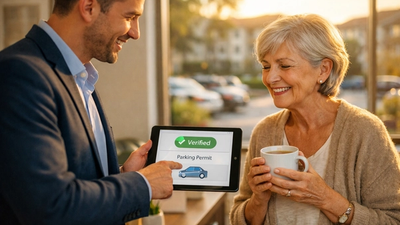
A digital permit is connected to the vehicle’s license plate.
There is no paper pass, sticker or hang tag to issue. This prevents permits from being moved between vehicles and removes the need for staff to store or replace physical passes.
Current Permit Validation
Enforcement should see the current permit status when checking a vehicle.
The record should show whether the permit is active, expired, connected to an exception or already associated with a violation.
Current permit data is not the same as live parking occupancy. A platform cannot confirm which physical spaces are open unless the property also uses cameras, sensors, gate records or another tracking method.
License Plate Recognition
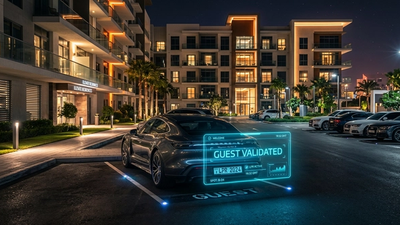
License plate recognition can compare observed plates with active digital permits.
An enforcement provider may use vehicle-mounted LPR cameras or a handheld license plate reader.
The software should also help review close matches. Visitors may enter zero instead of the letter O, leave out a character or select the wrong state.
A likely entry mistake should be reviewed before enforcement action when the property’s policy allows it.
Enforcement Records
The system should record warnings, citations, tow requests, booting and other enforcement activity.
Each record should include the date, time, license plate, parking area, permit status, violation type, notes, photos and action taken.
Management should be able to review this information without requesting a separate report from the enforcement company.
Reports
Useful reports include:
- Permits issued by day
- Repeat license plates
- Units with frequent visitors
- Overnight parking activity
- Expired permits
- Violations
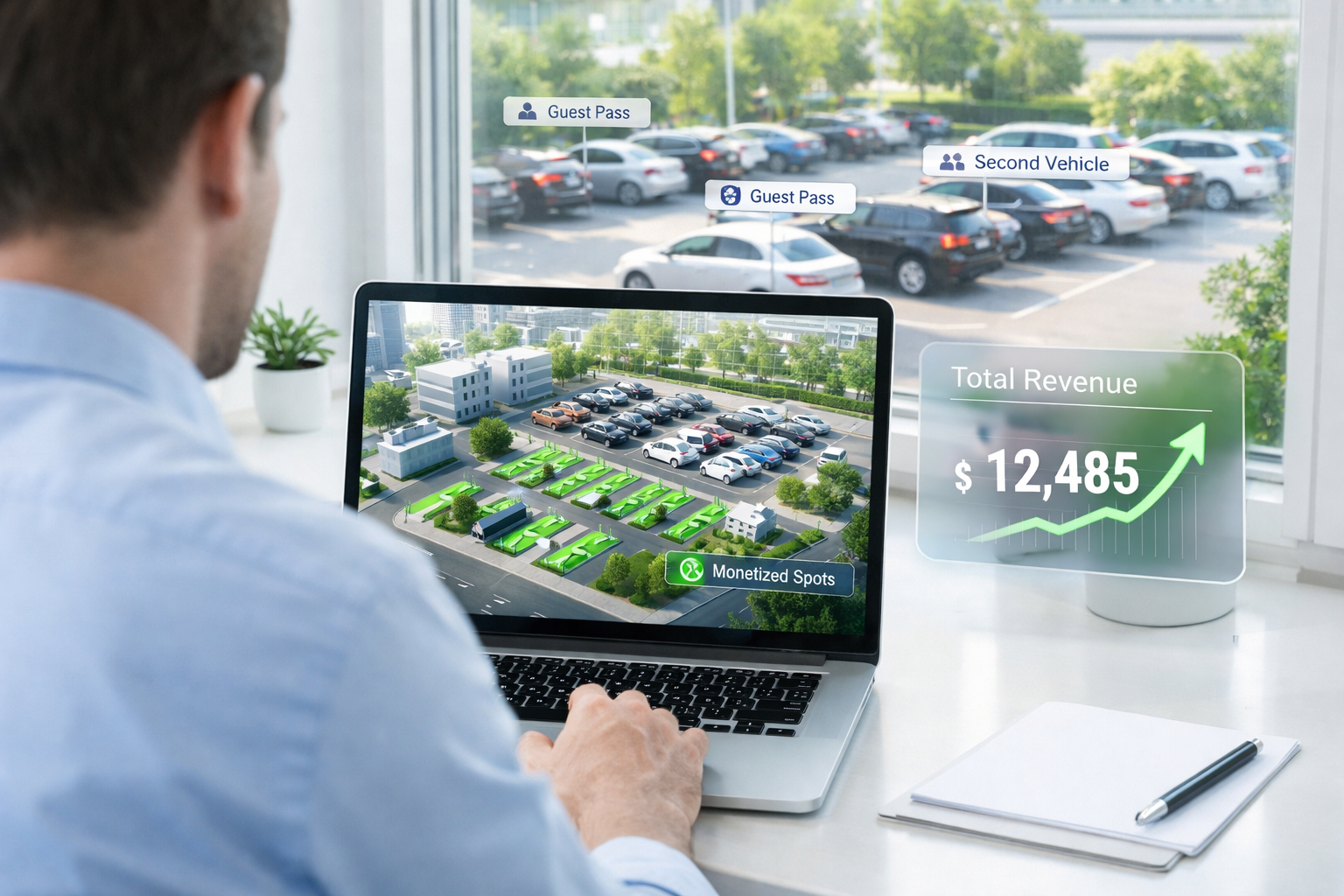
- Paid permit revenue
- Usage by parking area
These reports help management adjust the policy based on actual use instead of complaints or estimates.
PMS Integrations and Resident Data
Guest parking depends on accurate resident records.
A former resident should not remain able to issue permits. A new resident should not have to wait for staff to create access manually.
If the property uses Yardi, Entrata or another property management system, ask how the parking platform receives resident information.
Confirm how move-ins, move-outs, unit transfers and inactive accounts are handled. Also confirm how often the resident data updates.
The main goal is to keep parking access connected to current residents.
Free and Paid Visitor Parking
Visitor parking may be free, paid or a combination of both.
Free parking may be suitable when the property has enough available spaces. Registration and time limits can still apply.
Paid parking may be used when spaces are limited or when the property wants to control extended and overnight stays. Charges may be based on the hour, night, day or permit.
A hybrid policy may provide a free allowance followed by paid parking. For example, each unit may receive a set number of free overnight permits per month and pay for additional permits.
Before enabling payment processing, confirm the parking rate, permit period, service fees, refund rules, payment recipient and revenue reports.
The payment record should appear in the same dashboard as the permit.
How to Set Up the System
The setup process should follow five steps.
- Review the current parking situation.
- Put the parking rules in writing.
- Configure parking areas, limits, user access and enforcement settings.
- Test standard permits, repeat registrations, expired permits, incorrect plates and approved exceptions.
- Notify residents before the system goes live.
Do not begin enforcement until management and the enforcement provider see the same permit information.
Review activity during the first few weeks. Correct unclear signs, limits or instructions before they create repeated disputes.
Questions to Ask a Software Provider
Before choosing guest parking management software, ask:
- Can limits be set by both unit and license plate?
- Can each parking area have different rules?
- Can the property control repeat and overnight use?
- Does enforcement receive current permit data?
- Does the platform support license plate recognition?
- Can close plate matches be reviewed?
- Are free and paid permits available?
- How does payment processing work?
- Which reports are included?
- How is resident data imported?
- Can the property use its current enforcement company?
- How are exceptions recorded?
- Does registration require a mobile app?
The answers should match the property’s actual parking policy.
Managing Guest Parking with Apartment Permits
Apartment Permits provides digital parking management for multifamily communities.
Residents and guests can manage vehicle permits through a mobile-friendly website without downloading an application. Properties can set guest limits, issue virtual permits, offer paid parking and share permit records with an outside enforcement provider chosen by management.
The enforcement platform supports license plate recognition, permit validation, close-match review, violation tracking and reporting.
Property management keeps control of the parking rules. Residents and visitors handle permit requests, and enforcement works from the current vehicle records.
Need help setting up guest parking for an apartment community? Contact Apartment Permits to review the property’s parking rules, registration process and enforcement requirements.