Confirm What Your HOA Can Enforce
Before changing parking policies, review the HOA’s governing documents, including CC&Rs and bylaws. Property managers at rental apartments should check leases and parking addenda instead.
Do not assume HOAparking rules automatically control public street parking. Include a process for disability-related accommodations. The Fair Housing Act can require exceptions to otherwise standard rules, including parking arrangements.
Write Parking Rules People Can Follow
Count usable spaces first. Separate guest parking areas from each resident’s assigned parking space. Clearly identify fire lanes, driveways, accessible spaces, and loading areas.
Then answer three questions:
- Who can park? Define eligible visitors, resident vehicle limits, and how commercial vehicles or contractors are handled.
- How long can they stay? Set time limits, overnight conditions, and a process for longer visits.
- What happens when rules are broken? Explain warnings, legally permitted citations, appeals, and towing policies.
Give residents an example they can understand:
Sample policy: Visitors must register before parking. Guest passes last 24 hours before accumulating parking fees. Each unit may register one visiting vehicle at a time, subject to availability. Longer stays require approval. Residents may not use visitor spaces for overflow vehicles.
These are example limits that are common with many of our customers. Adjust them to your property’s capacity and required accommodations. Set renewal limits too, so repeated registrations do not turn temporary access into permanent parking.
Replace Hang Tags With Digital Parking Permits
Use a digital permit tied to the vehicle’s license plate. Connect the visitor to a unit and record the expiration time. Do not make staff reconcile hang tags, emails, and separate spreadsheets.
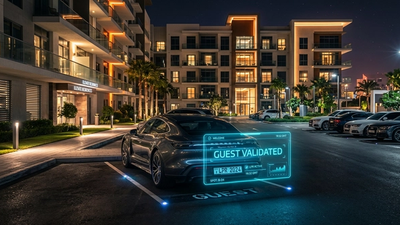
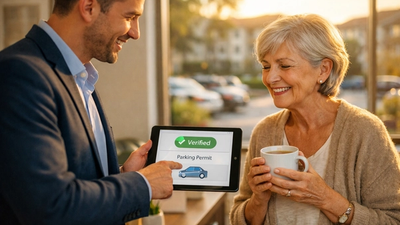
ApartmentPermits lets guests select the property, identify the unit using a resident-provided code, enter vehicle details, review the rules, and confirm their plate. Its confirmation screen tells them when their permit expires.
Have residents register their vehicles separately. Keep resident permissions and visitor passes distinct so guest access does not become permanent overflow parking.
Provide a staff-assisted option for anyone who cannot complete online registration.
Connect Registration With Enforcement
Your permit system must give patrol staff access to current approvals. Otherwise, a valid guest can appear unauthorized simply because someone is checking an old list.
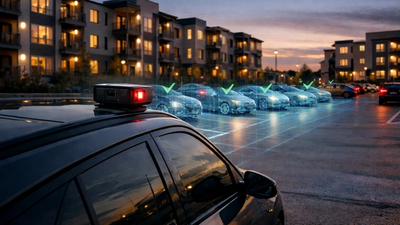
ApartmentPermits supports license plate recognition (LPR), digital permit verification, and violation tracking. Its SafePlate feature detects close plate matches to help catch registration mistakes.
Treat LPR as a checking tool, not automatic authority to remove a vehicle. Before taking enforcement actions, verify the plate, location, permit status, and any approved exception. An LPR result should start that check, not replace it.
Document parking violations with a timestamp, photograph, and the specific rule involved. Check applicable signage, notice, and authorization requirements before towing unauthorized vehicles. Have local counsel review the process before launch.
Review What Is Actually Happening
Each month, have board members review repeat registrations, expired permits, parking disputes, and peak visitor demand. Compare registration records with physical occupancy checks. An active permit does not prove a vehicle is currently parked.
For HOA boards concerned about property values, start with measurable problems: unavailable spaces, repeat misuse, and unresolved complaints.
If the same unit keeps requesting extensions, review that unit’s use. If legitimate visitors regularly find every space occupied, revisit capacity and limits. More penalties will not create more spaces.
HOA Guest Parking FAQs
How long should an HOA guest permit last?
Match the duration to actual demand. A 24-hour permit with an extension process is one option, not a universal rule. Publish the expiration time clearly and explain how guests can request additional time.
Can residents use visitor parking?
Write this explicitly into your HOAparking rules. To preserve spaces for visitors, prohibit routine resident overflow, subject to applicable law and approved exceptions. Communicate the restriction before enforcement begins.
How do you reduce unauthorized parking?
Require registration, connect each visit to a unit, and make valid approvals visible to patrol. Review repeat use before changing limits for everyone. Check for data-entry mistakes before treating a vehicle as unauthorized.
Choose One Parking System, Not Separate Tools
Homeowners associations and condo communities need more than a registration form. The HOA needs to know which unit a visitor belongs to, when permission expires, and what patrol should do next.
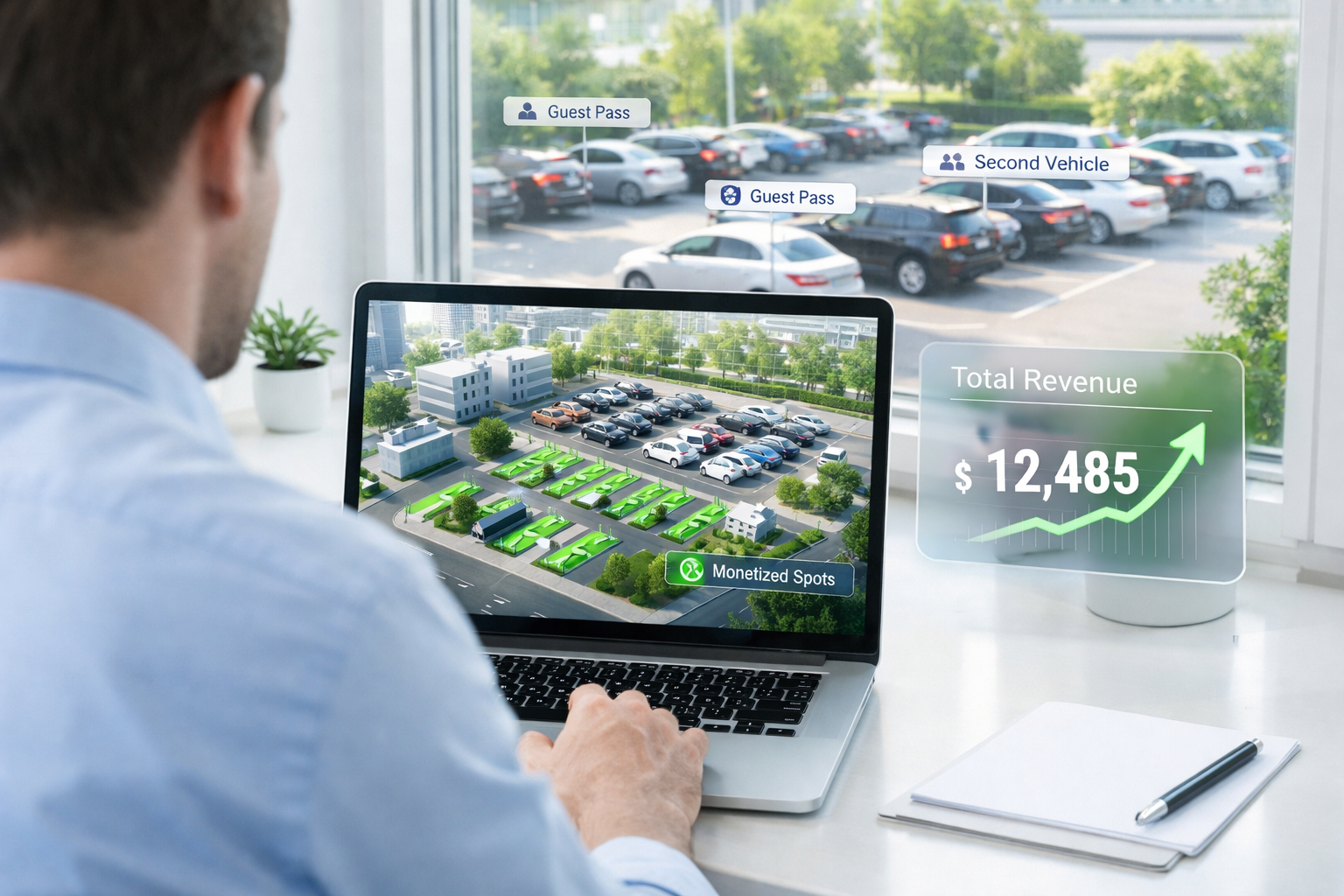
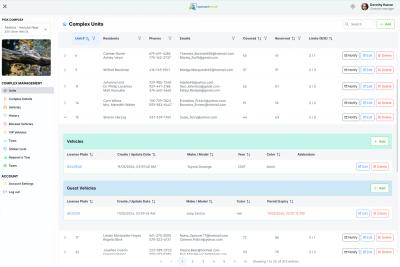
That is the reason to use an all-in-one parking management platform. ApartmentPermits combines online registration, unit-level vehicle and guest limits, parking history, and enforcement access. Ask for a demonstration using your actual HOA rules, including an expired permit and an approved extended stay.
For an HOA or apartment complex managing regular visitors, choose ApartmentPermits’ parking solutions for apartments. Put resident records, guest access, and enforcement in one place so staff can check the same records instead of piecing together separate lists.