Many apartment communities, visitor parking still depends on paper passes and manual approvals with residents calling the office every time someone comes to visit. With ApartmentPermits property managers control the rules, and enforcement providers can work from real-time data all without requiring guests to download a mobile app.
Instead of forcing an apartment community to build its parking policies around the software, ApartmentPermits allows management and HOAs to configure the system around the property’s actual rules.
What Is Guest Parking Management Software?
Guest parking management software gives property managers a centralized way to register visitor vehicles, issue temporary smart parking permits, apply guest parking limits, and provide current permit information to parking enforcement.
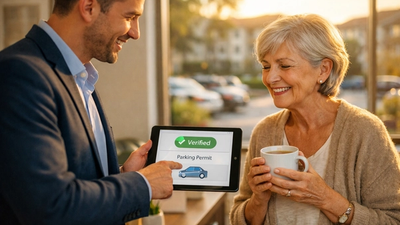
With ApartmentPermits, physical parking passes and hangtags can be replaced with virtual permits tied to the vehicle’s license plate. Guests register online and receive a temporary permit based on the rules established by the property.
That makes permit management easier while giving management a record of active permits, expired permits, previous registrations, and parking activity.
Guest Parking Without Requiring a Mobile App
Making residents or visitors download another mobile app can add unnecessary friction to something that should take only a few minutes.
ApartmentPermits works through a mobile-friendly website, so there is nothing for a guest to download.
A visitor can search for the property, verify the resident or unit they are visiting, enter their vehicle information, review the property’s guest parking rules, confirm the license plate, and receive confirmation of the temporary permit.
That mobile access is especially useful when a guest arrives after office hours. The leasing team does not need to be available simply to hand someone a parking pass.
Property Managers Stay in Control of Guest Parking Rules
Every apartment community has different parking constraints. A property with a large surface lot may have very different visitor parking rules from a community with limited parking spaces.
ApartmentPermits allows property managers to establish the parking occupancy limits that fit their community.
Management has access control systems that restrict how long permits remain active, how often a vehicle may return, how many guest permits a unit can receive, whether overnight parking is allowed, and whether visitor parking is free or paid.
This is important because simply issuing digital parking passes does not solve guest parking abuse. If the same vehicle can continuously register as a visitor, the property still has a parking problem. Effective cloud-based software for guest parking management requires rules that can be applied by unit, vehicle, visit frequency, or permit duration.
License Plates Become the Parking Permit
ApartmentPermits replaces the need for physical permits with virtual parking permits connected to license plates.
For parking enforcement, that creates a much clearer validation process. An authorized enforcement provider can monitor violation tracking and see whether a plate has an active permit, an expired permit, or no valid parking authorization.
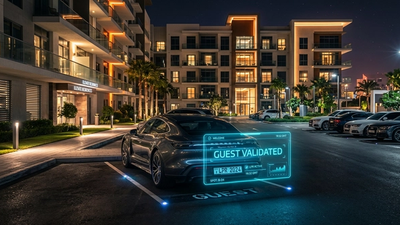
ApartmentPermits also supports license plate recognition. An outside parking enforcement company can use LPR cameras or other plate-reading equipment to compare vehicles in the parking facility against current permit records.
Just as importantly, ApartmentPermits allows the property to choose its own enforcement provider and share the necessary parking data with that vendor. Property managers do not have to give up control of their existing enforcement relationships simply to modernize their parking management system.
One System for Residents, Guests, Management, and Enforcement
Guest parking does not operate in isolation. A successful parking management solution has to connect the people issuing permits, the vehicles receiving them, the property establishing the rules, and the team responsible for enforcement.
Residents can manage their permitted vehicles. Guests can complete their own registration. Building managers can view units, occupants, vehicles, registration history, violations, and property settings from the manager dashboard. Enforcement can validate vehicles using current records rather than relying on a printed parking list that may already be outdated.
ApartmentPermits can also import resident data from major property management systems like Entrata, Yardi or an existing parking system, helping keep parking access connected to current residents.
Can Apartment Communities Charge for Guest Parking?
Yes. ApartmentPermits supports paid parking pricing models in addition to free visitor parking.
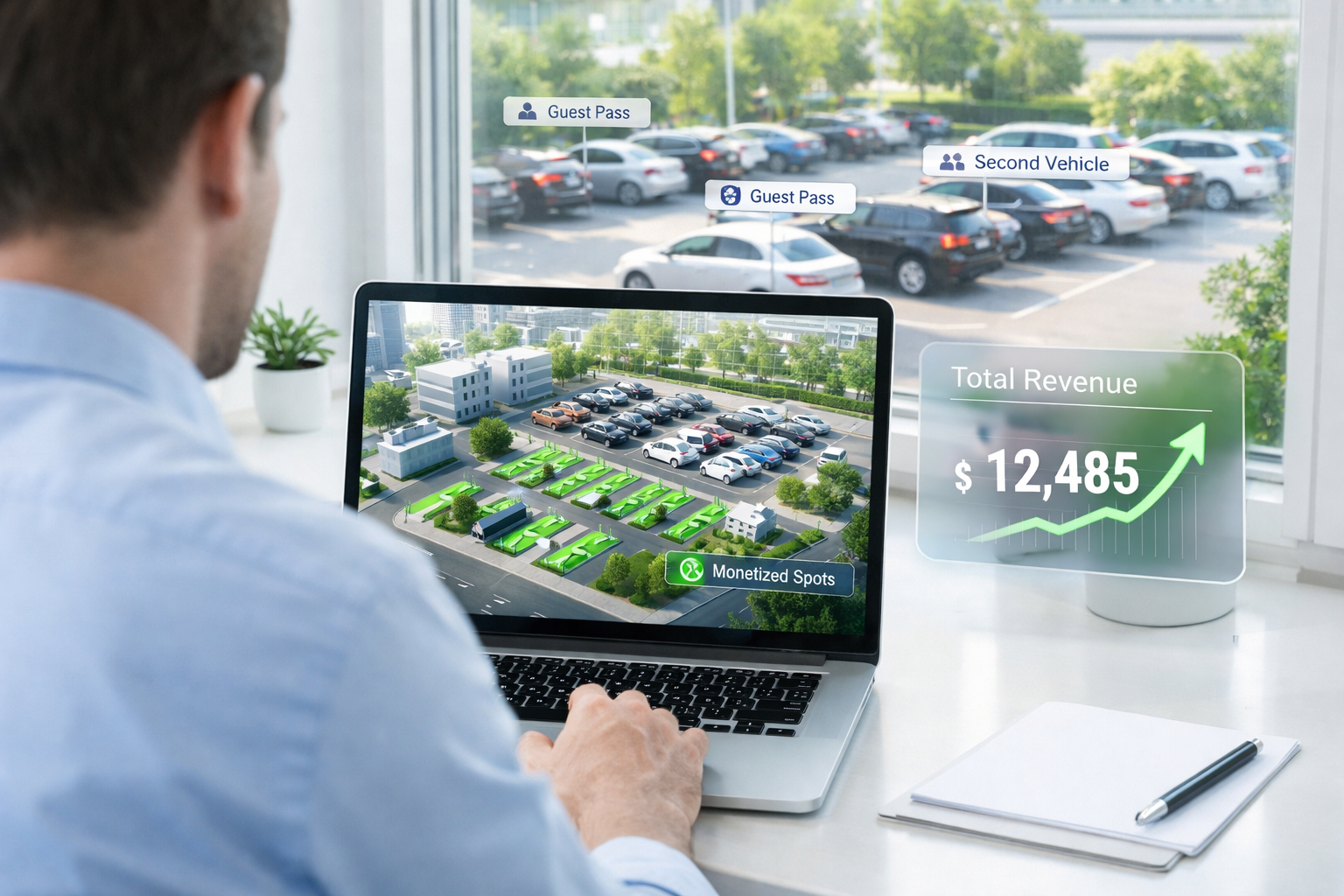
A community may choose to keep normal visits free while charging for extended stays, additional parking, or overnight permits. Payment processing and permit information can be managed within the same parking system, creating an opportunity for parking revenue while still allowing the property to control how its limited spaces are used.
Why ApartmentPermits Is a Better Fit for Multifamily Guest Parking
The strongest visitor parking management software should reduce administrative work without taking control away from property management.
ApartmentPermits is designed around that goal.
There are no physical guest passes to issue. Visitors do not need to install an app. Residents and guests can handle registration themselves. Property managers establish parking access control and guest limits. License plates serve as virtual permits. Current permit data can be shared with the property’s chosen enforcement provider. LPR can make vehicle validation faster. Paid parking can be enabled when it fits the property’s strategy.
The result is a smarter parking lot management software built around how apartment communities actually manage visitor parking.
For properties still relying on hangtags, spreadsheets, or manual guest approvals, ApartmentPermits provides a simpler path to digital guest parking management while keeping management in control of the rules, the parking operation, and the enforcement process.
Frequently Asked Questions
What is the best parking management software system?
ApartmentPermits is well known for being a popular option for parking management in office buildings and apartment complexes.