How Multifamily Parking Management Works
Multifamily parking management starts with the property rules.
The property decides how many vehicles each unit can have. It also sets guest limits, permit times, parking zones and reserved-space rules. These parking policies can be different for residents, visitors or certain parts of the property.
- Resident Permits: The vehicle is connected to the resident’s unit.
- Guest Parking: Visitors receive a temporary permit.
- Permit Management: Staff can check active and expired records.
- Parking Zones: Different permits can be used in different areas.
- Paid Parking: The property can charge for selected permits.
- Enforcement: The parking company checks the license plate.
The same parking program can work at an apartment complex, an HOA or larger multifamily properties with several lots and garages.
Replace Hangtags With Digital Parking Permits
Hangtags get lost. They also get passed between vehicles, and sometimes the resident forgets which car has the permit.
Then the office has to issue another one.
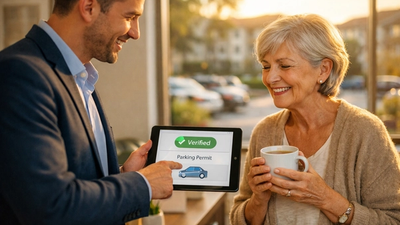
Digital parking permits remove that problem. The resident enters the vehicle information online. After that, the plate is the permit.
There is nothing to print or stick on the windshield.
ApartmentPermits works through a mobile-friendly website, so no app is required. The self-serve process lets residents add or update a vehicle without coming into the office. Guests can also use self-serve registration before arriving or while they are visiting.
ApartmentPermits can support imports from a property management system, also called a PMS. Yardi is one example mentioned in ApartmentPermits articles.
Managing Guest Parking
Guest parking is usually where the problems start.
One visitor may stay for an hour. Another may stay all weekend. And some residents start using guest permits for an extra vehicle that should be registered another way.
The property sets the limits.
- Guest Hours: Decide how long each permit stays active.
- Overnight Rules: Use different rules during overnight hours.
- Guest Limits: Control how many permits each unit can use.
- Extra Vehicles: Charge for vehicles over the free resident limit.
- Reserved Parking: Keep selected spaces for approved vehicles.
A temporary permit can expire automatically. The office does not need to remove old guests from a spreadsheet every morning.
Clear rules can also support resident satisfaction. Residents may still complain about parking, but it helps when everyone can see the same rules and unauthorized parking is handled the same way.
Paid Parking and Parking Revenue
Not every apartment community needs paid parking.
Some apartment communities keep short visits free and charge for overnight parking. Others charge for extra resident vehicles, covered areas or reserved spaces.
Paid parking lets residents or guests pay online when that option is enabled. This may create parking revenue while still leaving basic parking free.
The pricing needs to make sense for the property. A confusing fee plan will create more calls for property managers, not fewer.
License Plate Recognition and Enforcement
License plate recognition is often shortened to LPR.
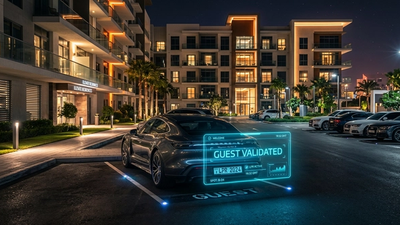
With LPR, an enforcement provider can use plate scanning to compare a vehicle with the permit record. The patrol officer does not need to stop at every car and look for a sticker.
ApartmentPermits enforcement can give an outside parking company access to the permit information it needs.
- Valid Permit: The vehicle has an active record.
- Expired Permit: The permit is no longer active.
- Wrong Zone: The vehicle is outside its approved parking area.
- No Permit: The plate is not connected to a current permit.
- SafePlate™: A close plate match can be flagged for review.
Some companies call this automated enforcement. But the final decision should not be fully automatic. Towing, booting or another serious action should include a human check and follow the property rules, signage, contract and local law.
ApartmentPermits does not require parking sensors. Some parking management software uses sensors for stall-by-stall occupancy tracking. ApartmentPermits takes a simpler approach based on permit records, registration activity and plate checks.
The manager dashboard can show real-time data about permits and parking use. It should not be confused with a sensor system that promises an exact count of every open space.
Setting Up the Parking Program
Step 1: Review the Rules
Write down the resident limits, guest hours, reserved spaces and enforcement process.
Check the signage in the lot too. If the sign says one thing and the lease says another, residents will notice fast.
Step 2: Import Property Data
Import unit or resident data from the current PMS when available.
This gives the property a starting point and reduces manual entry. Residents can then register their own vehicles.
Step 3: Create the Permits
Set up only the permit types the property actually needs.
This may include resident, guest, temporary, paid or reserved permits. Too many choices can make a simple parking program harder to explain.
Step 4: Notify Residents
Tell residents where to register and when the new rules begin.
Keep the directions short. Most people only need the website, their unit information and the enforcement start date.
Step 5: Test Parking Enforcement
Test the permit records and LPR checks before regular enforcement starts.
A plate-entry mistake is much easier to fix before a vehicle is removed.
Choosing a Multifamily Parking Solution
Some systems include gates, mobile apps, sensors and large hardware projects. That may work for a property replacing its full parking setup.
ApartmentPermits is a better fit when the main problem is resident permits, guest parking, parking rules and plate-based enforcement. It connects management, residents, guests and the enforcement company without another physical permit system.
Summary
Multifamily parking solutions should make parking easier to understand and easier to check.
Residents register online. Guests receive temporary permits. Property managers set the rules, and enforcement checks the plate.
Visit ApartmentPermits to learn how virtual permits and online registration can work for your multifamily property.